Vienna's Museums: A Deep Dive into Art and History
Vienna is not merely a city; it is a sprawling testament to centuries of artistic evolution and imperial grandeur. Walking through its streets in January 2026, one can feel the weight of history in the cobblestones, but the true soul of the Austrian capital resides within its magnificent institutions. For travelers seeking more than just surface-level sightseeing, Vienna offers a dense concentration of culture where the Habsburg legacy meets radical modernism. Whether you are an art aficionado chasing the golden hues of Klimt or a history buff eager to understand the complexities of the Austro-Hungarian Empire, the city’s museums provide an unparalleled narrative of the past.
The sheer number of exhibitions can be overwhelming for a first-time visitor, making it essential to prioritize based on your interests. From the opulent palaces converted into galleries to the stark, modern cubes of the MuseumsQuartier, every building tells a story that complements the art it houses. This guide peels back the layers of Vienna’s cultural scene, taking you on a journey through the absolute must-visit museums that define this sophisticated metropolis.
The Crown Jewel: Kunsthistorisches Museum (KHM)
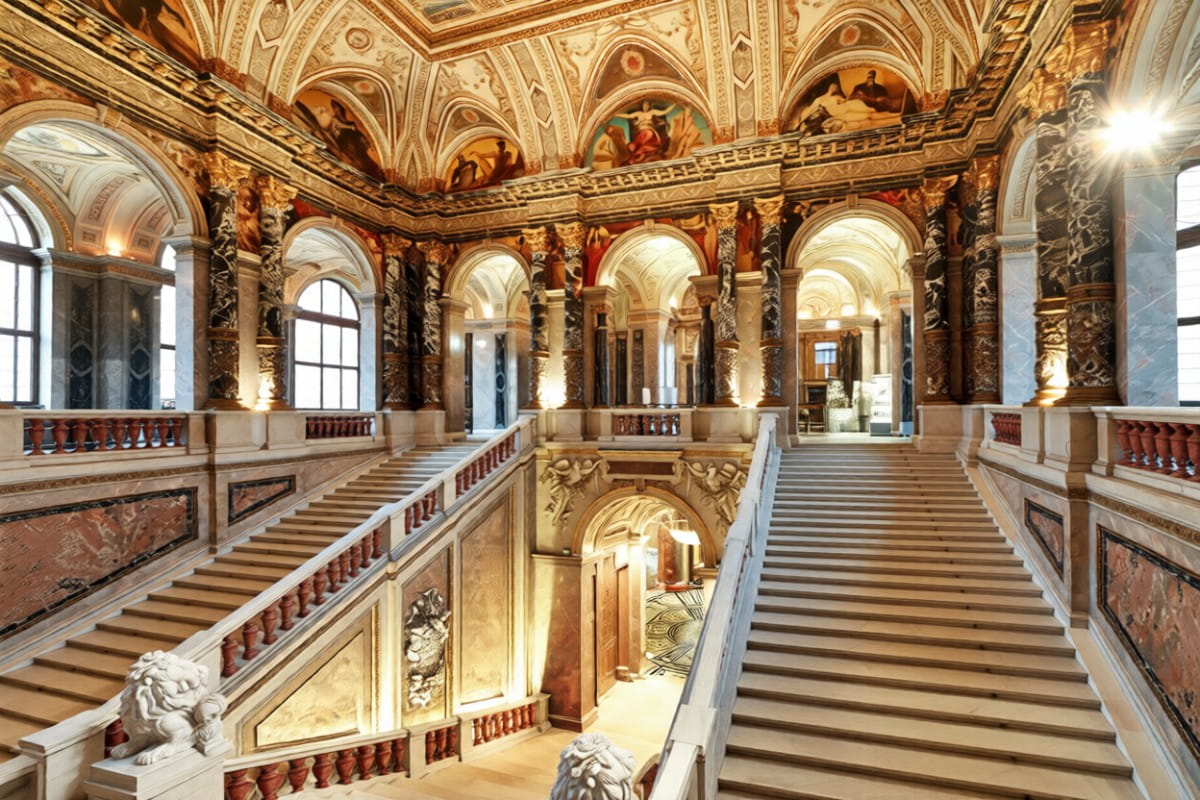
Dominating Maria-Theresien-Platz, the Kunsthistorisches Museum is often the starting point for any serious cultural exploration of Vienna. Commissioned by Emperor Franz Joseph I to house the formidable collections of the imperial family, the building itself is a masterpiece of 19th-century architecture. As you step into the grand entrance hall, you are greeted by a stunning interplay of marble, gold leaf, and intricate stucco work that rivals the artwork displayed in the galleries above. It is not just a museum; it is a monument to the collecting passion of the Habsburgs, spanning from Ancient Egypt to the late 18th century.
The Picture Gallery and The Kunstkammer
The Picture Gallery is renowned worldwide for possessing the largest collection of works by Pieter Bruegel the Elder, offering a fascinating look into 16th-century peasant life and landscapes. Beyond Bruegel, the walls are adorned with masterpieces by Rubens, Rembrandt, Raphael, and Titian, creating a visual symphony of the European Renaissance and Baroque periods. However, the true hidden gem for many is the Kunstkammer, or Chamber of Art and Wonders. This section features over 2,000 objects, including the famous Saliera (Salt Cellar) by Benvenuto Cellini, a golden masterpiece that represents the pinnacle of goldsmithing. The collection of automata, scientific instruments, and exotic curiosities here reveals the Renaissance obsession with understanding and categorizing the world.
Baroque Splendor at The Belvedere
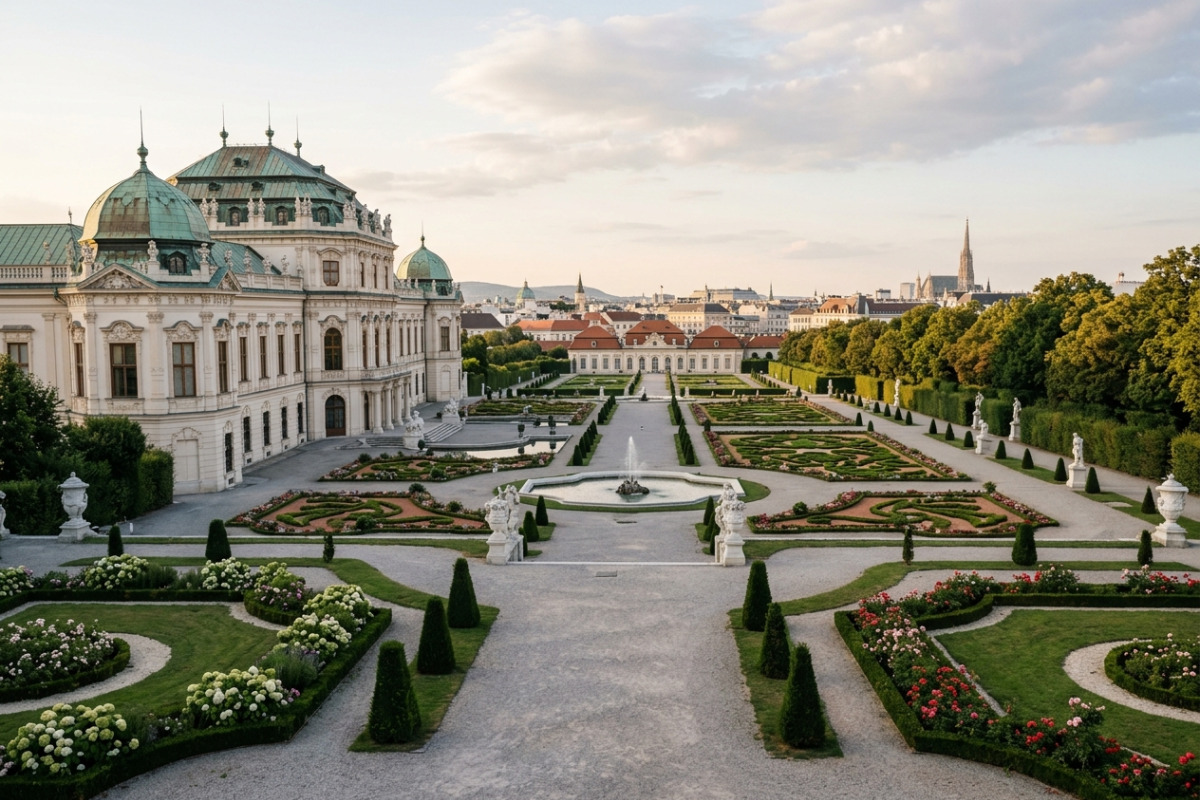
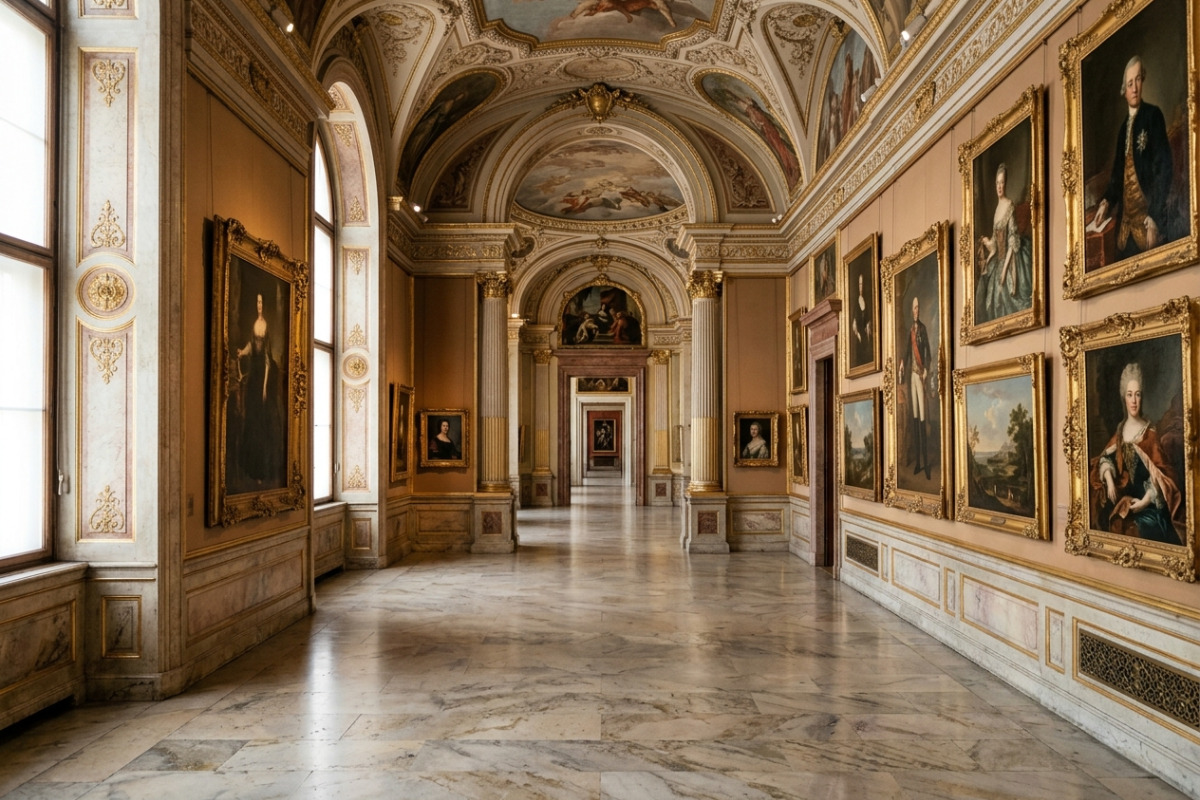
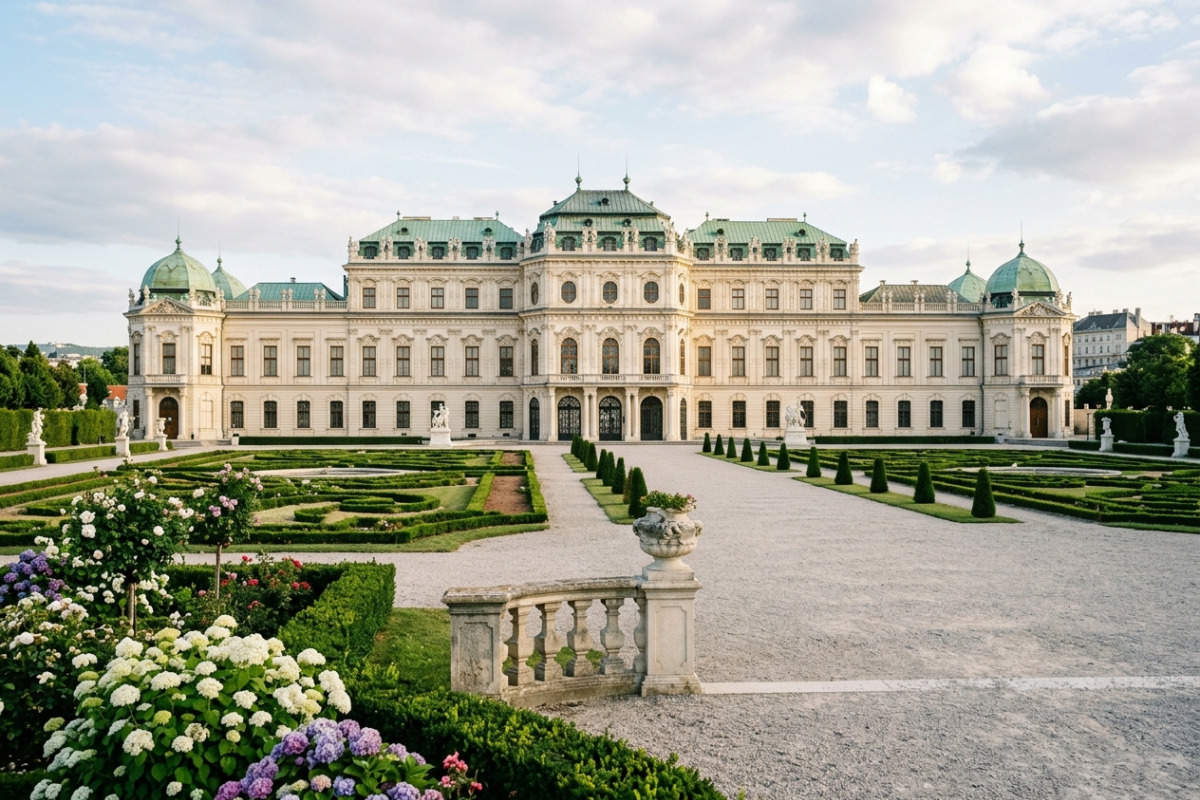
The Belvedere is not a single museum but a historic complex consisting of two Baroque palaces, the Upper and Lower Belvedere, connected by a sprawling garden that is beautiful even in the winter months. Originally the summer residence of Prince Eugene of Savoy, this UNESCO World Heritage site is the premier destination for Austrian art. The transition from the lavish staterooms to the galleries creates a unique atmosphere where architectural history and canvas art engage in a silent dialogue. It is here that the Austrian identity in art is most palpable, bridging the gap between the feudal past and the dawn of modernism.
Gustav Klimt and The Golden Age
The Upper Belvedere houses the world's largest collection of Gustav Klimt paintings, serving as a pilgrimage site for lovers of Art Nouveau. The undeniable highlight is The Kiss, a shimmering icon of love and reconciliation that captures the essence of the Viennese Secession movement. Viewing this piece in person allows you to appreciate the texture of the gold leaf and the delicate expressions of the lovers, details often lost in reproductions. Alongside Klimt, the museum offers a profound look at the works of Egon Schiele and Oskar Kokoschka, whose raw, psychological portraits provide a stark, necessary contrast to Klimt’s ornamental beauty.
- Key Highlights at the Belvedere:
- The Kiss (Klimt): The centerpiece of the collection and a symbol of Viennese Art Nouveau.
- Judith (Klimt): A powerful, seductive interpretation of the biblical figure.
- Character Heads (Messerschmidt): A bizarre and fascinating series of grimacing busts in the Lower Belvedere.
- The Marble Hall: A stunning architectural feat offering panoramic views of Vienna.
The Albertina: From Graphics to Modernism
Perched on one of the last remaining sections of Vienna's old fortifications, The Albertina combines the flair of a Habsburg residential palace with the dynamism of a world-class art museum. It is most famous for its graphic art collection, which is among the largest and most important in the world, featuring over a million prints and tens of thousands of drawings. The museum rotates these fragile works carefully, but facsimiles of Albrecht Dürer’s Young Hare are often on display to represent the collection's depth. The staterooms, restored to their original splendor, offer a glimpse into the lifestyle of the archdukes who once resided here, complete with original furniture and chandeliers.
In recent years, the Albertina has expanded its narrative with the opening of the Albertina Modern in the Künstlerhaus. While the main building focuses on the span from Old Masters to French Impressionism—boasting works by Monet, Degas, and Picasso—the Albertina Modern dedicates itself to Austrian and international art post-1945. This dual approach allows visitors to trace the lineage of artistic expression from the meticulous draftsmen of the Renaissance to the abstract experimentations of the 21st century.
MuseumsQuartier (MQ): The Modern Pulse
If the Kunsthistorisches Museum represents the imperial past, the MuseumsQuartier (MQ) represents Vienna’s vibrant present and future. Once the imperial stables, this massive complex is now one of the largest districts for contemporary art and culture in the world. The atmosphere here is distinctly different; it is a social hub where locals gather on the famous Enzi furniture in the courtyards, surrounded by museums that challenge the status quo. The architecture is a striking mix of historic Baroque structures and bold, modern limestone facades, symbolizing Vienna’s successful fusion of old and new.
The Leopold Museum and MUMOK
Within the MQ, the Leopold Museum is an absolute essential for understanding the psychological depth of Viennese Modernism. It holds the world's most comprehensive collection of Egon Schiele’s works, showcasing his tragic genius through jagged lines and somber tones. Just across the courtyard stands the MUMOK (Museum of Modern Art Ludwig Foundation), a dark basalt cube that houses a formidable collection of Pop Art, Fluxus, and Photorealism. Moving between these two institutions offers a jarring but enlightening perspective on how art shifted from the internal, angst-ridden focus of the early 20th century to the external, consumer-driven critiques of the post-war era.
Choosing Your Experience
With so many options, it can be difficult to decide where to dedicate your time. The following table breaks down the distinct character of each major institution to help you plan your itinerary effectively.
| Museum | Primary Focus | Best For |
| Kunsthistorisches Museum | Old Masters, Antiquities, Kunstkammer | Lovers of Renaissance art, history, and grand architecture. |
| Belvedere Palace | Austrian Art, Gustav Klimt, Baroque Architecture | Romantics and fans of Art Nouveau and The Secession. |
| The Albertina | Graphic Art, Impressionism, Photography | Those who appreciate sketching, prints, and French modern art. |
| Leopold Museum | Viennese Modernism, Egon Schiele | Visitors interested in the psychological and emotional depth of early 20th-century art. |
| MUMOK | Contemporary Art, Pop Art, Avant-Garde | Fans of abstract concepts, modern installations, and bold architecture. |
Beyond the Main Attractions: Exploring More of Vienna's Museums
While the Kunsthistorisches Museum, Belvedere, Albertina, and MuseumsQuartier are essential stops, Vienna's museum landscape extends far beyond these renowned institutions. Consider venturing off the beaten path to discover hidden gems like the Hundertwasserhaus, a vibrant apartment building designed by Friedensreich Hundertwasser that embodies his unique architectural philosophy. While not strictly a museum, it offers a glimpse into his artistic vision and commitment to ecological design. Another worthwhile visit is the Haus des Meeres, an aquarium housed in a former flak tower, offering stunning views of the city alongside its diverse marine life.
For those interested in applied arts, the MAK (Museum of Applied Arts) showcases design, architecture, and crafts from various periods, providing a fascinating counterpoint to the fine arts collections. And for a truly unique experience, the Third Man Museum delves into the history of the classic film noir set in post-war Vienna, offering insights into the city's complex past.
Historical Context: Beyond the Canvas
While art is a major draw, Vienna’s museums also serve as custodians of a complex history. The Sisi Museum located within the Hofburg Palace, for instance, offers a deeply personal look into the life of Empress Elisabeth. Moving beyond the romanticized myths, the exhibits display her personal artifacts, poetry, and even the file used in her assassination, painting a portrait of a misunderstood and melancholic figure. It provides a necessary human context to the imperial grandeur seen elsewhere in the city.
Similarly, the Sigmund Freud Museum at Berggasse 19 invites visitors into the birthplace of psychoanalysis. Although the original couch is in London, the museum has been renovated to offer a profound conceptual experience of Freud's life and work. Walking through his former apartment and practice rooms offers a chilling and inspiring connection to the intellectual revolution that took place within these walls. These historical museums complement the art galleries by fleshing out the intellectual and social environment that allowed Vienna's artistic scene to flourish.
Planning Your Visit: Practical Information
To make the most of your museum visits, it's helpful to have some practical information at your fingertips. Most museums are open from 10:00 AM to 6:00 PM, but hours can vary, especially on holidays. It's always a good idea to check the museum's official website for the most up-to-date information. Ticket prices typically range from €15 to €25 per museum. Many museums offer combination tickets or discounts for students, seniors, and families. The Vienna Pass can be a worthwhile investment if you plan to visit multiple museums, as it provides free entry to many attractions. Consider purchasing tickets online in advance to avoid long queues, especially during peak season. Finally, comfortable shoes are essential, as you'll be doing a lot of walking!
Final Thoughts for the Cultural Traveler
Exploring Vienna's museums is a marathon, not a sprint, and the sheer density of masterpieces requires a pace that allows for reflection. As we move through 2026, these institutions continue to modernize their curation, offering better accessibility and more engaging narratives than ever before. Whether you find yourself lost in the intricate details of a Bruegel landscape or standing in awe before the golden glow of Klimt, the experience is sure to leave a lasting imprint. Vienna does not just display history; it invites you to participate in it, ensuring that every visit reveals a new layer of its endless cultural depth.