18th
18th Century – A Baroque Summer Residence
Prince Eugene & the birth of Belvedere
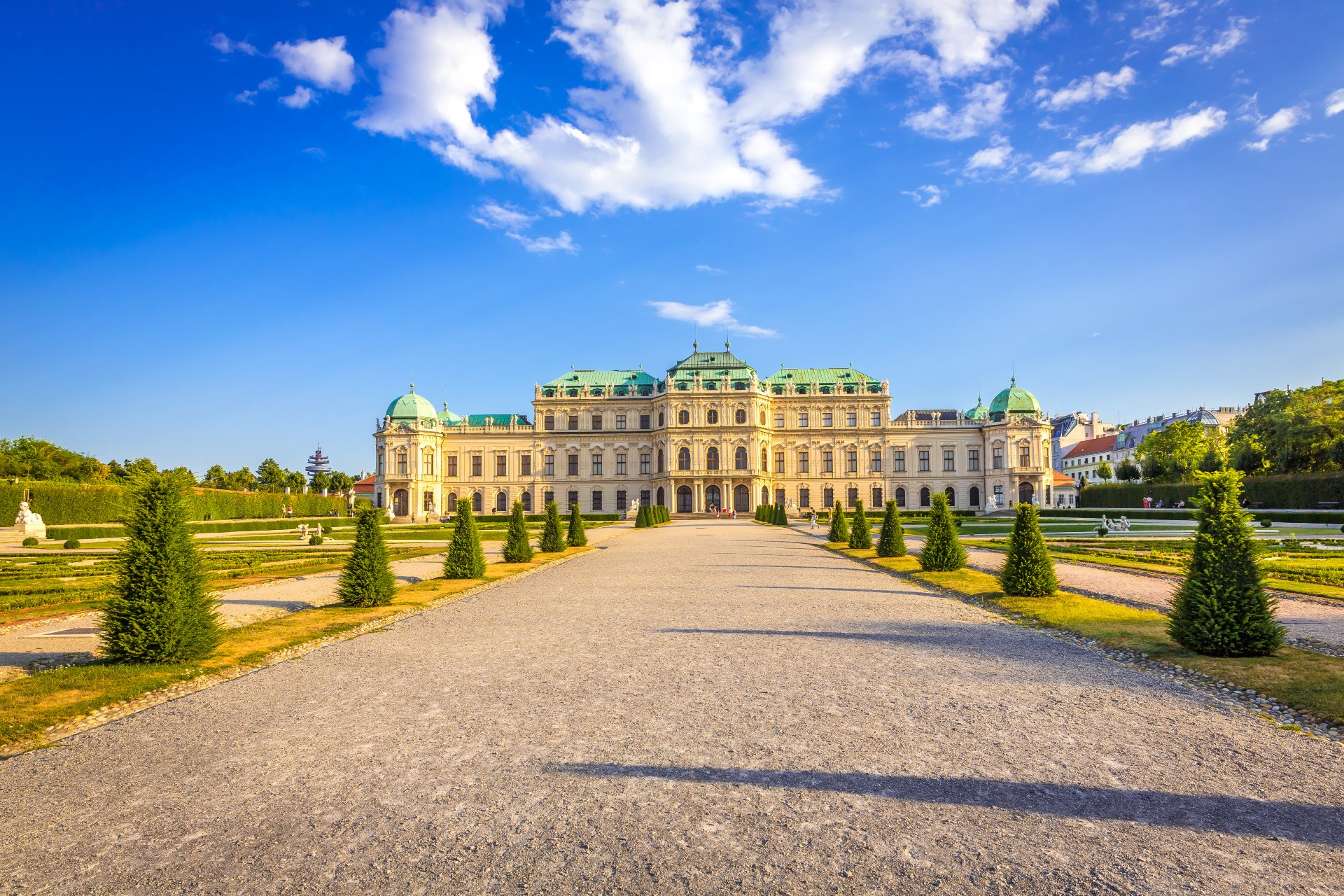
Between 1668 and 1745, Prince Eugene of Savoy commissioned the renowned architect Johann Lucas von Hildebrandt to design a grand summer residence in Vienna's Landstrasse district. The result was a Baroque ensemble consisting of two palaces – the Upper and Lower Belvedere – linked by a magnificent formal garden which remains one of the finest of its kind in Europe.
In 1781, the Upper Belvedere made history by becoming one of the first museums in the world to open its doors to the public, housing the Imperial Picture Gallery for all to see.
The Lower Belvedere served as the prince's main residential palace, while the Upper Belvedere functioned
as a prestigious show palace for receptions and celebrations. Architecture, interior décor, and
gardens were all designed to reflect Prince Eugene's status, taste, and military success.
19th
19th Century – Imperial Collections and Public Access
From private palace to imperial gallery
After Prince Eugene's death, the Belvedere eventually came into Habsburg hands and was used
in various ways by the imperial family. Over time, parts of the complex were adapted to house
imperial art collections, turning the palaces into an important venue for displaying painting
and sculpture.
By the 19th century, the idea of an imperial gallery accessible to a wider public gained
importance. The Belvedere became one of the places where visitors could encounter historic
and contemporary art in a formal museum setting, foreshadowing its role as a national art
museum in the 20th century.
20th
20th Century – From Empire to Republic
War, restoration & a new Austria
The end of the Habsburg monarchy after World War I transformed the Belvedere into a key
institution of the new Austrian Republic. The palaces officially became a museum complex,
focused on Austrian art from the Middle Ages to the modern era.
On May 15, 1955, the Upper Belvedere became the center of world attention once again when the Austrian State Treaty was signed here. This historic agreement restored Austria's independence and sovereignty following World War II and the subsequent occupation.
World War II brought damage and disruption, but extensive restoration in the post-war years
preserved the Baroque architecture and interiors.
Throughout the 20th century, the Belvedere continued to build its collections, especially in
the field of Viennese Modernism – including Gustav Klimt, Egon Schiele, and Oskar Kokoschka –
eventually becoming one of the world's leading centres for this period.
21st
21st Century – A Museum Campus for All Periods
From Baroque to contemporary art
Today, the Belvedere functions as a multi-part museum campus: the Upper Belvedere showcases
the core collection of Austrian art and Klimt's famous The Kiss; the Lower Belvedere
invites visitors into its original Baroque residential halls; and Belvedere 21 presents
modern and contemporary art in a striking modernist building.
The complex is not only a museum but also a key landmark in Vienna's cityscape, drawing
visitors for its art, its Baroque gardens, and its role in Austria's cultural and political
history.