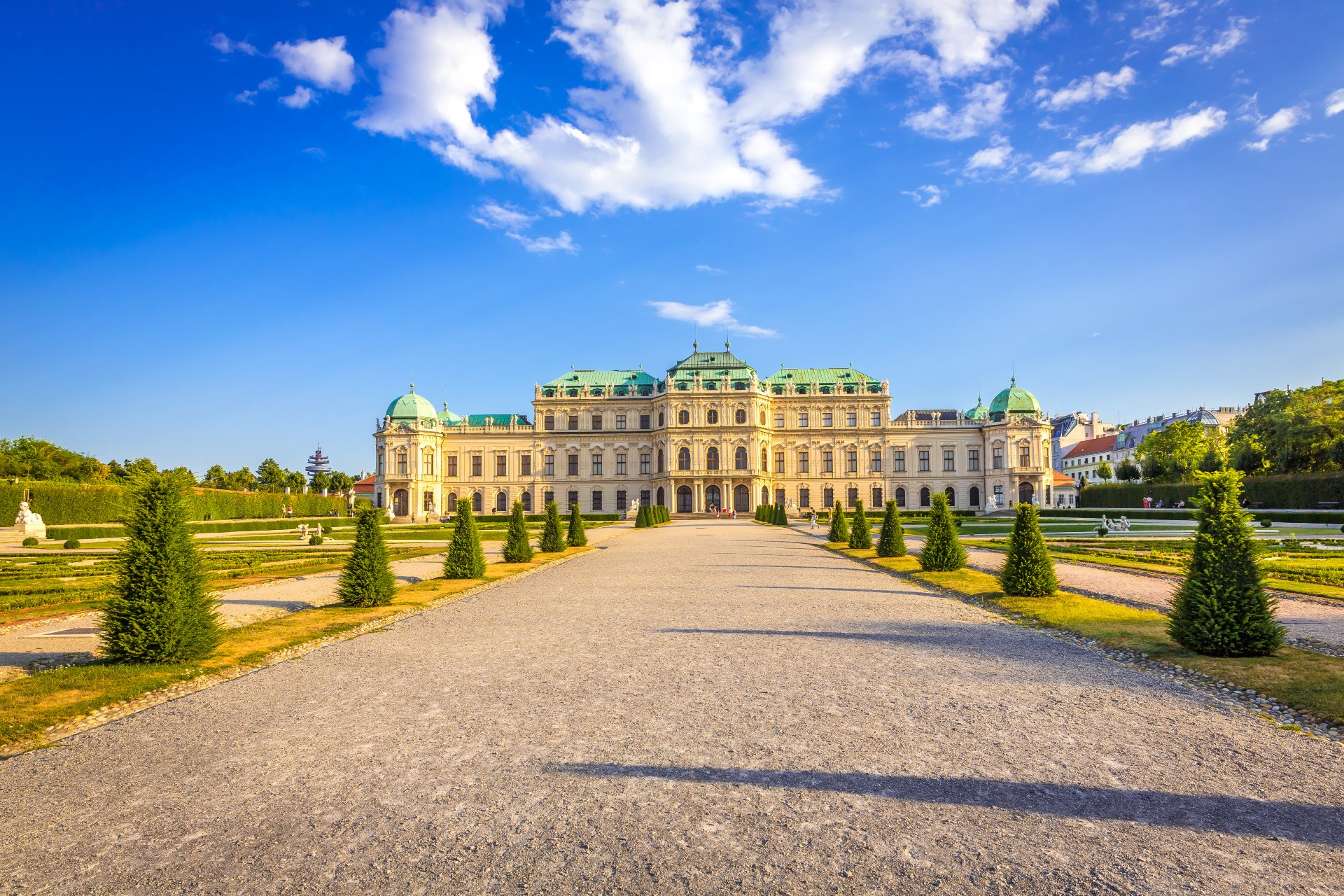
Art Highlight
Gustav Klimt & "The Kiss"
Discover the story behind Klimt's most famous painting, his Golden Period, and where to see it inside the Upper Belvedere.
Discover the story behind Klimt's most famous painting, his Golden Period, and where to see it inside the Upper Belvedere.
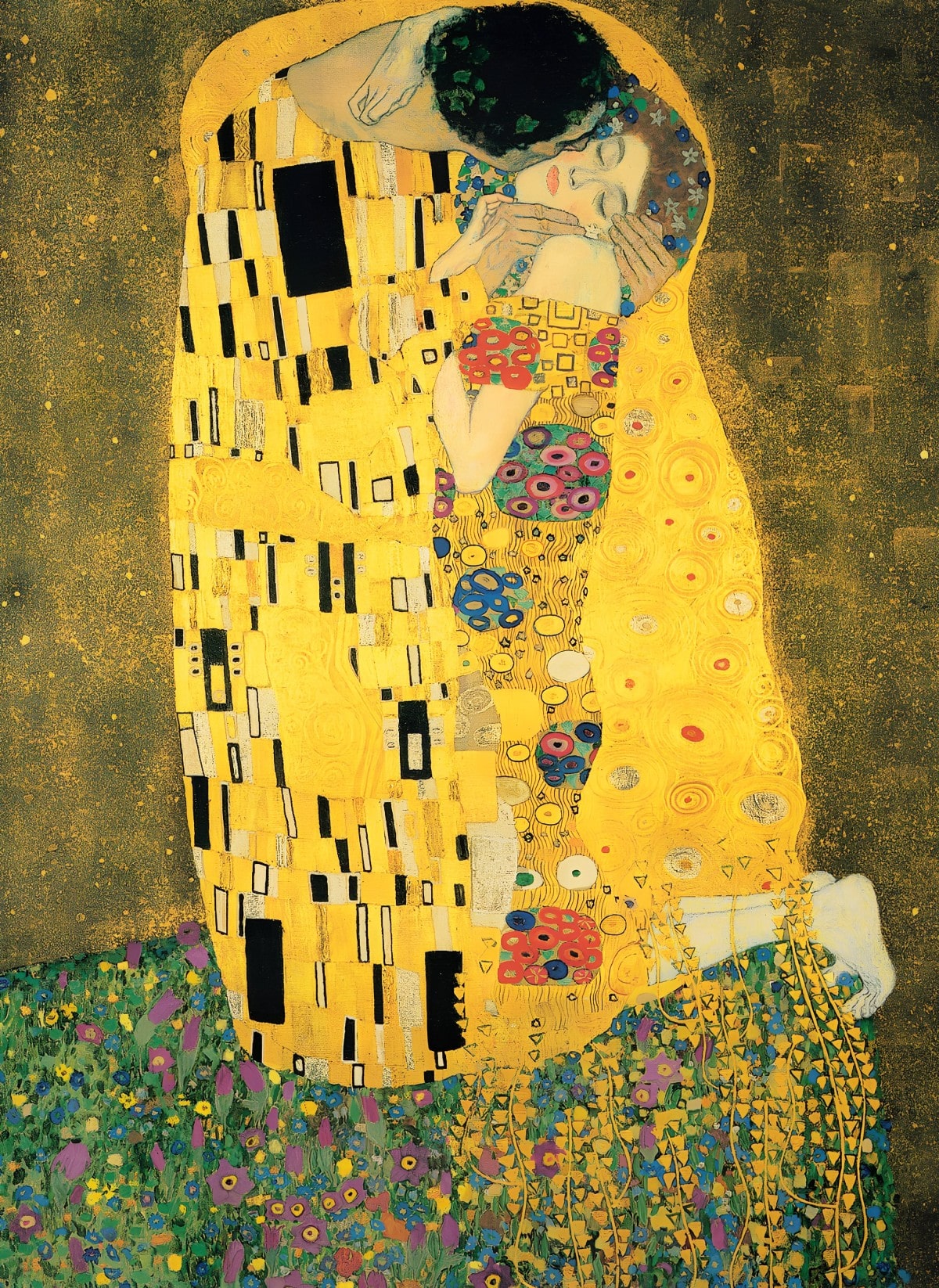
Klimt painted The Kiss at the height of his so-called "Golden Period". The couple locked in an embrace, wrapped in a shimmering cloak of gold and intricate patterns, has come to symbolise both the glamour and the intimacy of Vienna around 1900.
Artist of Vienna around 1900
Gustav Klimt (1862–1918) was one of the leading artists of the fin-de-siècle period in Vienna. Trained as a decorative painter, he first became known for large ceiling and wall paintings in public buildings before turning toward a more personal, symbolist style.
In 1897, Klimt co-founded the Vienna Secession, a group of artists who wanted to break with the conservative art establishment and open Vienna to new, international movements. His work from this period combines ornamental surfaces, flattened forms, and a strong focus on the human figure – especially women.
During his "Golden Period" in the first decade of the 20th century, Klimt made extensive use of gold leaf, intricate patterns, and influences ranging from Byzantine mosaics to Japanese prints. The Kiss is the best-known masterpiece from this phase.
A golden embrace on the edge of a cliff
Klimt painted The Kiss around 1907–1908. The composition shows a couple in a close embrace, their bodies wrapped in a cloak of gold patterns: angular forms for the man, circular motifs for the woman. The figures kneel on a flower-strewn meadow at the edge of a cliff, suspended in a timeless, golden space.
The painting is often interpreted as an image of idealised love, but it also reflects the wider cultural moment in Vienna around 1900 – a fascination with psychology, symbolism, and the inner life. The rich, decorative surface links fine art to the applied arts that were so important to the Viennese Secession.
Finding "The Kiss" inside the museum
The Kiss is on permanent display at the Upper Belvedere. As the museum's most famous work, it is showcased in a dedicated gallery with optimal lighting and space for visitors to appreciate its shimmering gold surface up close.
Location: Upper Belvedere, 1st Floor, Gallery 10
Book your entry ticket →Avoid the peak crowds between 11 AM and 3 PM. Early morning or late afternoon (after 4:30 PM) is usually the best time to see the painting in a quieter atmosphere.
You are visiting an independent, unofficial travel guide & fan site. We provide historical info and handpicked partner links for official tickets and tours.