Echoes of Nature: The Symbolism in Austrian Landscape Painting
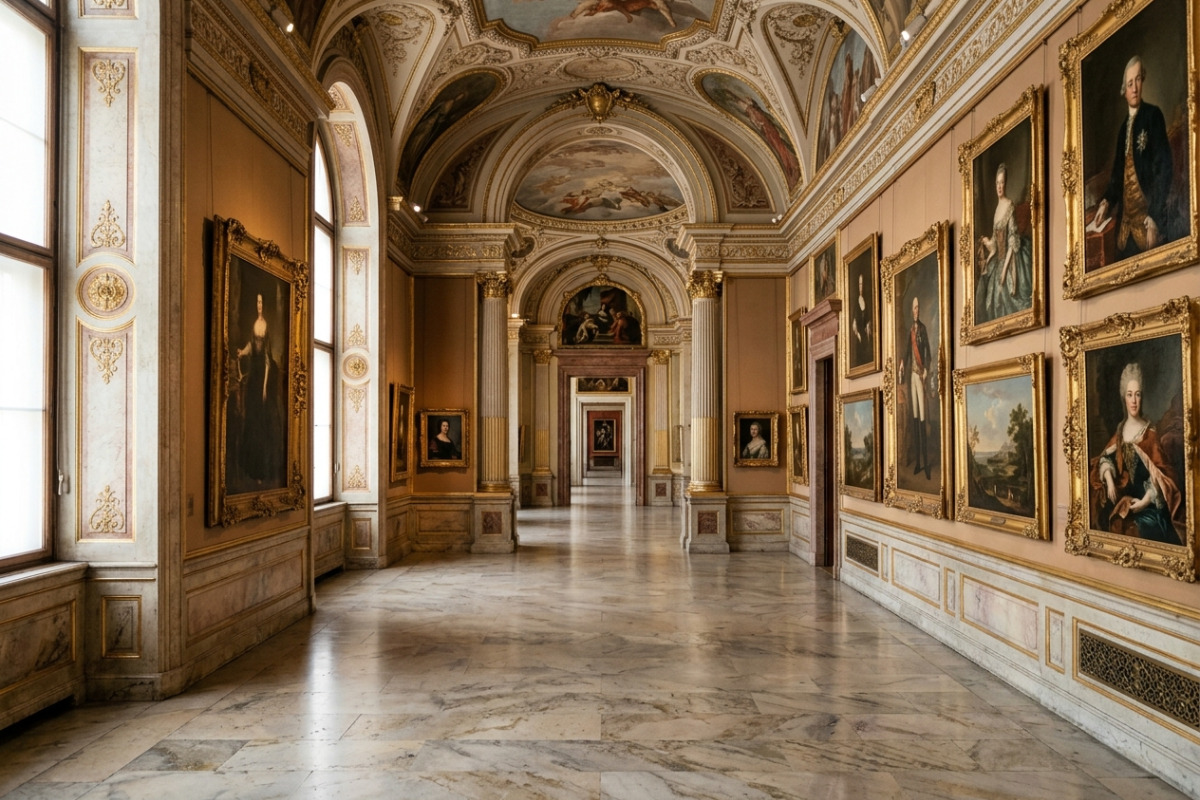
When you step into the hallowed halls of the Belvedere in Vienna, you are not merely entering a gallery; you are stepping into a dialogue between the human spirit and the natural world. Austrian art history is uniquely tethered to the landscape. From the jagged peaks of the Alps to the serene, glass-like surfaces of the Salzkammergut lakes, the geography of Austria has long served as more than just a picturesque backdrop. For the masters of the 19th and early 20th centuries, nature was a canvas for the psyche, a realm where deep emotional currents and philosophical inquiries were painted in vibrant greens, melancholic blues, and shimmering golds. As we navigate through January 2026, the relevance of these introspective works remains as potent as ever, reminding us of our eternal connection to the earth.
To view these paintings is to understand that a tree is rarely just a tree, and a mountain is seldom solely a geological formation. The artists of the Biedermeier era, the Atmospheric Realists, and the Vienna Secessionists used the outdoors to encode messages about transience, nationalism, isolation, and tranquility. By uncovering these hidden meanings, we transform our visit to the Belvedere from a simple sightseeing tour into a profound journey through the Austrian soul.
The Landscape as a Mirror of the Soul
In the realm of Austrian art, the transition from the 19th to the 20th century marked a significant shift in how nature was perceived. It moved away from the purely documentary or romanticized vistas of earlier eras toward something far more introspective. This concept, often referred to as Stimmungsimpressionismus or "Mood Impressionism," suggests that the landscape is not an external reality to be captured, but an internal state to be projected. When you look at a gloomy wetland or a sun-drenched meadow in the Belvedere collection, you are looking directly into the artist's emotional state at the moment of creation.
This approach allowed artists to explore complex themes without uttering a word. The isolation of a single farmhouse amidst a vast, snowy field speaks volumes about human solitude and resilience. Conversely, the chaotic, tangled undergrowth of a forest might represent the complexity of the subconscious mind. This symbolism turned landscape painting into a philosophical exercise, questioning humanity's place within the grand, often indifferent, cycles of nature.
Decoding the Visual Language of Nature
To truly appreciate the depth of the Belvedere's landscape collection, one must learn to read the recurring motifs that appear across different movements. These elements were chosen deliberately to evoke specific feelings or concepts. Here are some of the most profound symbols found in these masterpieces:
- The Solitary Tree: Often depicted standing alone against a vast sky or a harsh terrain, this motif frequently symbolizes individual resilience, loneliness, or the defiance of the human spirit against the elements. Consider, for example, the stark beauty of Albin Egger-Lienz's landscapes, where lone trees often stand as silent witnesses to human struggle.
- Still Waters (Lakes and Ponds): Particularly prevalent in the works of Gustav Klimt, water often represents the depth of the subconscious. The reflective surface acts as a mirror, blurring the line between reality and the dream world, inviting deep contemplation. Klimt's series of paintings depicting the Attersee are prime examples of this motif.
- The Changing Seasons: Austrian artists were masters of capturing the seasons to mirror the stages of life. Spring represents rebirth and hope, while the golden hues of autumn often signify melancholic decay, wisdom, or the inevitable passage of time. Think of the poignant autumnal landscapes of Carl Moll, capturing the fleeting beauty of the season.
- Mountain Peaks: The Alps are inescapable in Austrian identity. In painting, they often symbolize the sublime—a beauty that is terrifyingly vast—representing spiritual aspiration or the insurmountable challenges of life. The works of Caspar David Friedrich, though German, profoundly influenced Austrian artists in their depiction of the Alps as symbols of the sublime.
- Fields of Flowers: Often seen in Biedermeier paintings, fields of flowers, particularly wildflowers, symbolize fleeting beauty and the ephemeral nature of life. They can also represent the simple joys and pleasures found in nature, as seen in the works of Ferdinand Georg Waldmüller.
Contrasting Styles: From Realism to Abstraction
The evolution of landscape painting in Austria is a fascinating journey from the detailed precision of the Biedermeier period to the decorative abstraction of the Secession. Understanding this evolution helps in grasping how the symbolism shifted from societal order to individual emotion.
| Feature | Biedermeier Era (e.g., Waldmüller) | Vienna Secession (e.g., Klimt) |
| Primary Focus | Realistic detail, light, and idyllic harmony. | Mood, atmosphere, and decorative structure. |
| Symbolism | Order, piety, and the beauty of simple life. | Psychological depth, timelessness, and isolation. |
| Perspective | Traditional depth and vanishing points. | Flattened spaces, often using a square canvas. |
| Emotional Tone | Optimistic, inviting, and clear. | Contemplative, mysterious, and intense. |
Gustav Klimt: The Square of Tranquility
While Gustav Klimt is globally renowned for his golden portraits, his landscapes are perhaps the most personal revelations of his character. During his summer sojourns on the Attersee, Klimt abandoned the human figure entirely, focusing instead on the lush vegetation and shimmering waters of the lake. What makes these works symbolically potent is his use of the square canvas. Unlike the traditional horizontal landscape format which implies a narrative or a journey, the square is static and balanced. It creates a "window" into a world where time has stopped.
In paintings like Farmhouse with Birch Trees or his various depictions of the Attersee, Klimt eliminates the horizon line. By doing so, he removes the viewer's ability to gauge distance, forcing the eye to rest on the surface texture and color. Symbolically, this creates a space of meditation. The painting becomes a sanctuary, a "Hortus Conclusus" (enclosed garden), where the chaos of the outside world—and the political turmoil of Vienna at the time—could not enter. It is nature distilled into pure tranquility.
Egon Schiele: The Melancholy of Decay
In stark contrast to Klimt’s lush, life-affirming tapestries of nature, Egon Schiele’s landscapes often carry a heavier, more somber symbolic weight. Schiele, known for his raw and often disturbing figure drawings, applied the same intensity to his depictions of towns and trees. His landscapes, such as Four Trees or his views of Krumau, are often devoid of people, yet they feel intensely human. The houses huddle together as if for warmth, and the trees often appear frail, stripped of their leaves, standing against cold, autumnal skies.
For Schiele, the landscape was a vehicle for expressing existential angst and the cycle of death and decay. A wilting sunflower or a solitary, barren tree was not just a botanical study; it was a self-portrait of the artist's own vulnerable psyche. These works at the Belvedere challenge the viewer to find beauty in sadness and to acknowledge the inevitable end that nature reflects back to us. They remind us that the natural world is not always a place of comfort, but also a mirror for our darkest introspections.
Ferdinand Georg Waldmüller: The Light of Truth
Stepping back in time to the Biedermeier period, the works of Ferdinand Georg Waldmüller offer a different kind of symbolism. At first glance, his paintings appear to be perfect, almost photographic representations of the Austrian countryside. However, beneath the pristine sunlight and happy peasant figures lies a strict moral and philosophical code. Waldmüller’s obsession with sunlight was not merely technical; it was symbolic of truth and divine order.
In his landscapes, the harmony between man and nature represents an ideal societal structure. The meticulous detail in every blade of grass and rock signifies a reverence for creation. While Klimt and Schiele looked inward, Waldmüller looked outward, presenting nature as a benevolent force that rewards hard work and simple living. His paintings in the Belvedere serve as a historical anchor, showing the idealized foundation from which the later, more turbulent modernists would eventually break away.
The Belvedere Experience: Where Art and Nature Converge
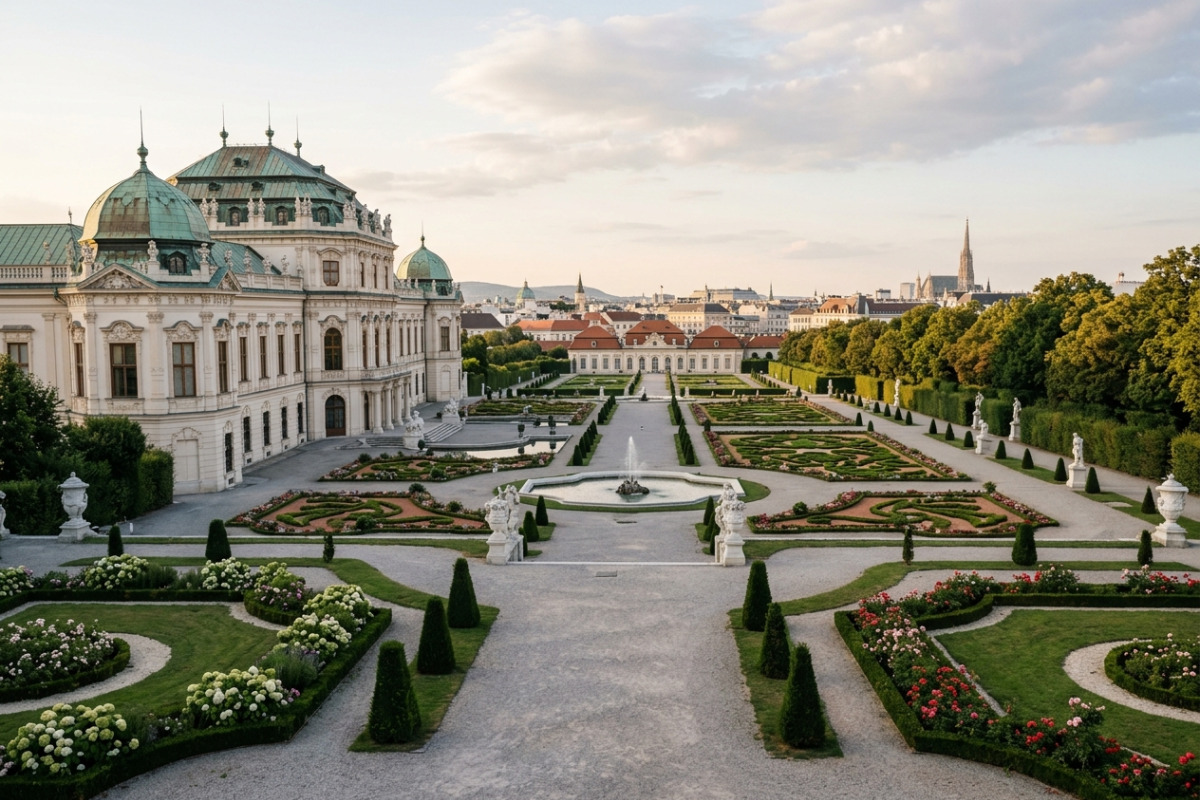
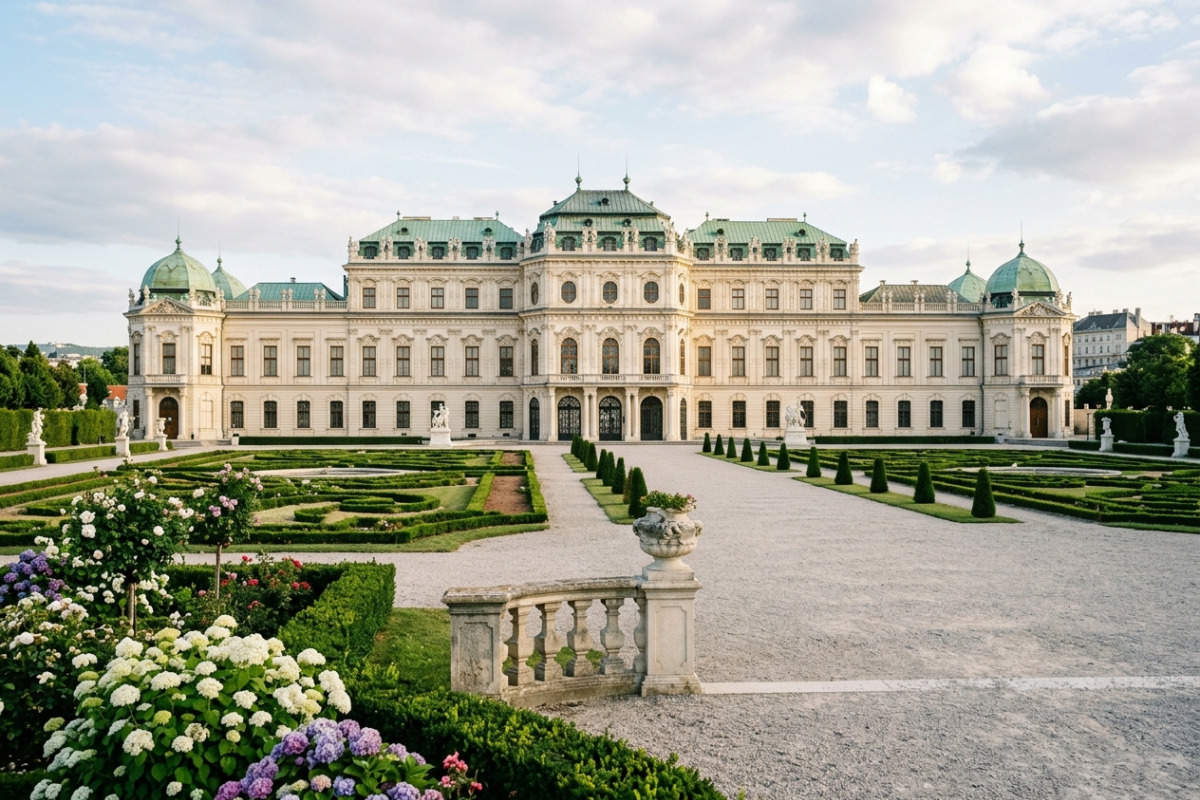
Visiting the Belvedere is the ultimate way to contextualize these artworks because the museum itself is a masterpiece of landscape architecture. Walking through the baroque gardens before entering the galleries primes the senses. You experience the manicured, controlled nature of the palace grounds, and then, upon entering the Upper Belvedere, you are confronted with the painted interpretations of nature—wild, emotional, and symbolic.
This juxtaposition enhances the narrative of the paintings. It allows the visitor to see how the Austrian relationship with the land has evolved from the desire to control and order it (Baroque gardens) to the desire to understand and feel it (Modernist painting). Whether you are drawn to the soothing abstraction of a Klimt lake or the crisp realism of a Waldmüller mountain path, the message remains clear: in Austria, nature is never silent. It echoes with the thoughts, dreams, and fears of those who paint it.