Culinary Delights: A Food Lover's Guide to Vienna
Vienna is a city that appeals to the palate just as much as it does to the eyes. Walking through the winding cobblestone streets of the First District, one is often greeted by an intoxicating blend of aromas: the deep, roasted scent of fresh coffee beans, the sweet allure of warm vanilla sauce, and the savory richness of simmering beef broth. For the traveler in January 2026, the Austrian capital offers a culinary landscape that perfectly balances centuries-old imperial traditions with a vibrant, innovative modern food scene. Dining here is not merely about sustenance; it is a cultural ritual, a moment to pause, and a way to understand the very soul of this historic metropolis.
The city's gastronomy is deeply rooted in its history as a melting pot of the former Austro-Hungarian Empire. You will find influences from Bohemia, Hungary, and Northern Italy woven seamlessly into local menus, creating a cuisine that is hearty, diverse, and incredibly comforting. Whether you are a dedicated foodie looking for the perfect fine-dining experience or a backpacker seeking the best street food, Vienna opens its arms—and its kitchens—to everyone. To truly experience the city, you must leave your diet at the border and surrender to the butter, sugar, and breadcrumbs that define Viennese hospitality.
The Institution of the Viennese Coffee House
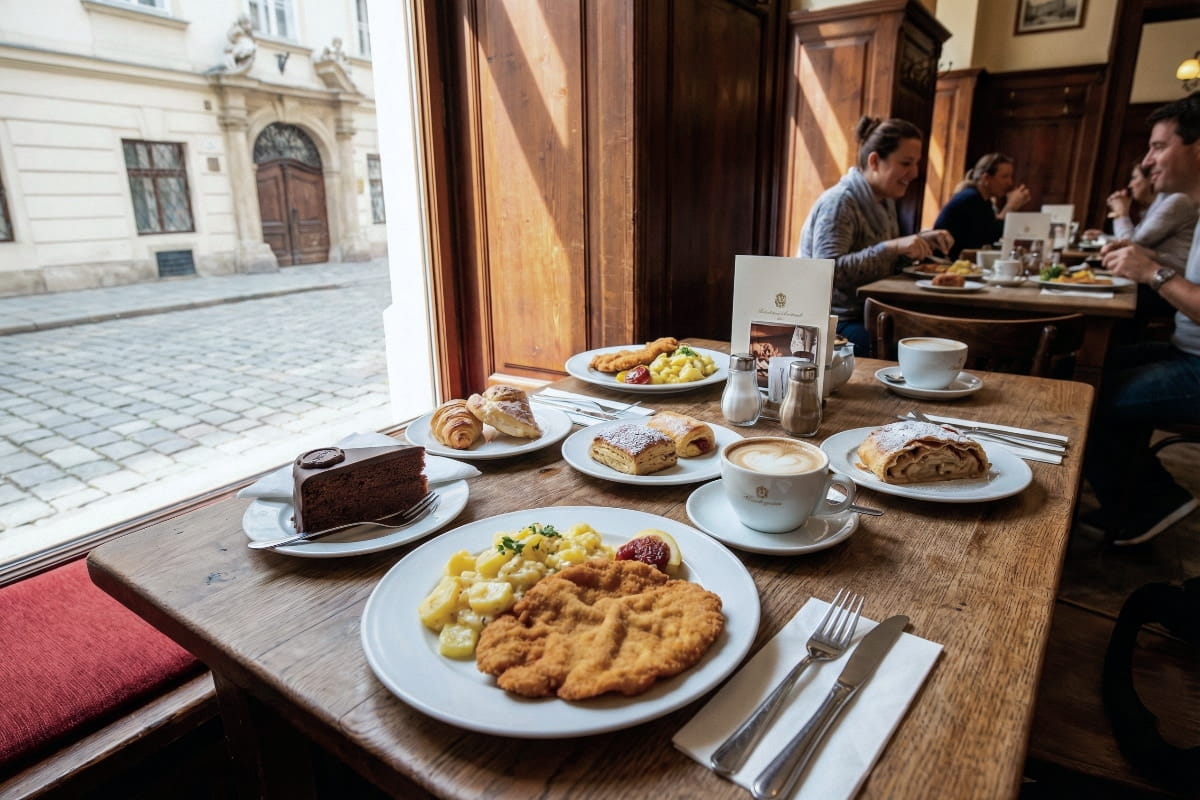
To understand Vienna, you must first understand its coffee houses. These are not places to simply grab a caffeine fix and rush to the office; they are extended living rooms where time seems to stand still. UNESCO has even recognized the Viennese coffee house culture as an intangible cultural heritage, and for good reason. Inside these establishments, often adorned with marble tables, velvet upholstery, and Thonet chairs, you can sit for hours with a single cup, reading a newspaper or people-watching without ever being rushed by the waiter. It is a sanctuary of coziness, or as the locals call it, Gemütlichkeit.
When you enter a traditional café, the menu can be somewhat intimidating if you are only used to standard espresso or latte options. The Viennese have a very specific vocabulary for their coffee, and ordering correctly is part of the charm. A glass of tap water is always served alongside your coffee, a tradition meant to cleanse the palate and keep you hydrated, signaling that you are welcome to stay as long as you wish. Below is a guide to help you navigate the classic orders like a local:
| Coffee Name | Description | Best For |
| Wiener Melange | Similar to a cappuccino but milder; one shot of espresso topped with half steamed milk and half milk foam. | Morning starters and cappuccino lovers. |
| Kleiner/Großer Brauner | A single or double espresso served with a small jug of cream on the side, allowing you to mix it to your taste. | Those who like control over their milk ratio. |
| Einspänner | Strong black coffee served in a glass, topped with a generous dollop of whipped cream and dusted with powdered sugar. | Indulgent afternoon treats. |
| Verlängerter | An espresso diluted with hot water (similar to an Americano) served with or without milk. | A lighter, longer-lasting coffee experience. |
The Holy Trinity of Viennese Classics
No culinary guide to Vienna would be complete without paying homage to the dishes that put this city on the global food map. The absolute king of the menu is, of course, the Wiener Schnitzel. A true authentic Wiener Schnitzel must be made of veal, pounded thin until it is tender, breaded, and pan-fried in clarified butter or lard. The hallmark of a perfect Schnitzel is the "soufflé effect," where the breading ripples and puffs away from the meat, creating a landscape of crispy golden bubbles. It is traditionally served not with french fries, but with a tangy potato salad mixed with lamb's lettuce and pumpkin seed oil, providing a refreshing acidity to cut through the richness of the fried meat.
Another pillar of the local cuisine is Tafelspitz, a dish so beloved that it was the favorite meal of Emperor Franz Joseph I. It consists of prime boiled beef simmered for hours in a vegetable broth until it is melt-in-the-mouth tender. The serving ritual is elaborate: the beef is presented in a copper pot with the broth and root vegetables, accompanied by crispy roasted potatoes (Rösti), creamed spinach, and two essential sauces—chive sauce and apple-horseradish. It is a dish that warms the soul, particularly during the crisp Viennese winters, offering a savory depth that reflects the rustic yet refined nature of Austrian cooking.
Street Food and Market Vibes: The Naschmarkt
For a sensory overload, travelers must head to the Naschmarkt, Vienna's most famous open-air market. Stretching for over a kilometer, this market is a bustling corridor of sights, sounds, and smells that brings together flavors from the Balkans, the Middle East, and traditional Austria. Here, you can sample exotic spices, vast arrays of olives, stuffed vine leaves, and local cheeses. It is a favorite spot for locals to gather on Saturday mornings to shop for fresh produce and catch up with friends over a glass of wine at one of the many market pavilions.
If you are looking for a quick, authentic bite while exploring the city center, look for a Würstelstand (sausage stand). These kiosks are an integral part of Vienna's late-night culture and street food scene. The must-try item here is the Käsekrainer, a smoked pork sausage stuffed with small cubes of cheese. When grilled, the cheese melts and creates a crispy, savory crust on the outside—a phenomenon locals jokingly refer to as a "pus foot," though the taste is undeniably delicious. Served with a slice of dark sourdough bread and sweet or spicy mustard, it is the ultimate comfort food on the go.
Beyond the Käsekrainer, keep an eye out for other Würstelstand specialties. The Burenwurst, a coarse, boiled sausage often served with Senf (mustard) and freshly grated horseradish, is another popular choice. For a vegetarian option, some stands offer grilled halloumi or vegetable skewers. Don't forget to try different types of mustard – from the classic sweet Kremser Senf to the fiery Estragon Senf (tarragon mustard) – to customize your sausage experience.
Sweet Temptations: Beyond the Sachertorte
Vienna is arguably the pastry capital of the world, and the debate over the best cake is a serious local sport. The most famous contender is the Sachertorte, a dense chocolate cake with a thin layer of apricot jam, coated in dark chocolate icing. While it is a historic icon, visitors should not limit themselves to just this one dessert. The sheer variety of cakes, strudels, and pastries available in the city's Konditoreien (pastry shops) is staggering and deserves thorough exploration.
- Apfelstrudel: Thin, hand-pulled dough wrapped around a filling of tart apples, cinnamon, sugar, and raisins. It is best enjoyed warm, often with a side of vanilla sauce.
- Kaiserschmarrn: A fluffy, shredded pancake that is caramelized in the pan with butter and sugar, often containing rum-soaked raisins. It is served with a side of plum compote (Zwetschgenröster) and is substantial enough to be a main course.
- Punschkrapfen: A small, cube-shaped sponge cake soaked in rum and punch, coated in bright pink icing. It is sweet, boozy, and visually striking.
- Topfenstrudel: A variation of the strudel filled with sweet quark cheese (curd), offering a creamy and slightly tangy alternative to the apple version.
Modern Dining and The New Viennese Kitchen
While tradition reigns supreme, a new generation of chefs is reshaping Vienna's culinary identity. The "New Viennese Kitchen" movement focuses on lightening heavy traditional recipes, utilizing organic, farm-to-table ingredients, and incorporating international techniques. In districts like Neubau and Leopoldstadt, you will find neo-bistros serving deconstructed versions of classics, focusing on seasonal vegetables and sustainable meat sourcing. These modern eateries offer a fresh perspective, proving that Viennese cuisine is not stuck in the past but is evolving dynamically.
For a truly modern Viennese experience, consider dining at restaurants like Steirereck (Michelin-starred, known for its innovative use of Austrian ingredients) or Restaurant Konstantin Filippou (another Michelin-starred establishment offering a creative tasting menu). For a more casual but equally impressive experience, explore the offerings at Mraz & Sohn or Silvio Nickol Gourmet Restaurant. These establishments represent the cutting edge of Viennese gastronomy, pushing boundaries while still honoring the city's culinary heritage.
Vegetarian and vegan travelers will find Vienna surprisingly accommodating in 2026. Many traditional restaurants now offer plant-based versions of Schnitzel made from celery root or seitan, and the city boasts a high density of purely vegan establishments. The focus on high-quality produce means that even simple vegetable dishes are prepared with immense care and flavor. This shift reflects a broader global trend but is executed with a distinctly Austrian commitment to quality and taste.
The Heuriger Tradition: Wine and Nature
Finally, no food lover's guide to Vienna is complete without mentioning the Heuriger culture. Located in the outer districts like Grinzing and Nussdorf, these wine taverns serve the "new wine" of the season, grown in the vineyards within the city limits. Vienna is one of the few capital cities in the world with significant wine production within its boundaries. A visit to a Heuriger involves sitting on wooden benches in a vine-covered courtyard, drinking crisp Gemischter Satz (a field blend of white grapes), and enjoying a buffet of cold cuts, spreads like Liptauer (spicy cheese spread), and dark breads. It is the perfect way to end a culinary journey, raising a glass to a city that truly knows how to eat, drink, and live well.