Architectural Styles of Belvedere Palace: A Blend of Baroque and Modernism
When you step through the wrought-iron gates of the Belvedere complex in Vienna, you are not merely entering a museum; you are stepping onto a stage that has been curated over three centuries. The air here feels different, charged with the weight of imperial history and the vibrant pulse of artistic innovation. While most travelers are drawn immediately to Gustav Klimt’s The Kiss, the true protagonist of this site is the architecture itself. It tells a story of a city that transitioned from the rigid, opulent confidence of the 18th-century Habsburg Empire to the transparent, experimental spirit of the modern era. As we explore the grounds in January 2026, the contrast between the snow-dusted Baroque statues and the sleek lines of the contemporary additions offers a profound visual dialogue about time, power, and beauty.
The Essence of High Baroque: A Monument to Victory
To understand the Belvedere, one must first understand the man it was built for: Prince Eugene of Savoy. Following his victories against the Ottoman Empire, he needed a summer residence that reflected his status as a military genius and a man of immense culture. He commissioned the renowned architect Johann Lukas von Hildebrandt, a rival of the imperial architect Fischer von Erlach, to create something spectacular. Hildebrandt’s design is the epitome of Viennese High Baroque, a style characterized by theatricality, movement, and a seamless integration of architecture with the surrounding landscape. Key features of this style, beyond the Belvedere, can be seen in other Viennese landmarks like St. Charles Church (Karlskirche), showcasing the widespread influence of Baroque principles. Unlike the heavy, fortress-like structures of the earlier Renaissance, the Belvedere feels light, almost as if it is floating, despite its massive scale.
The Lower Belvedere: Intimacy and Residence
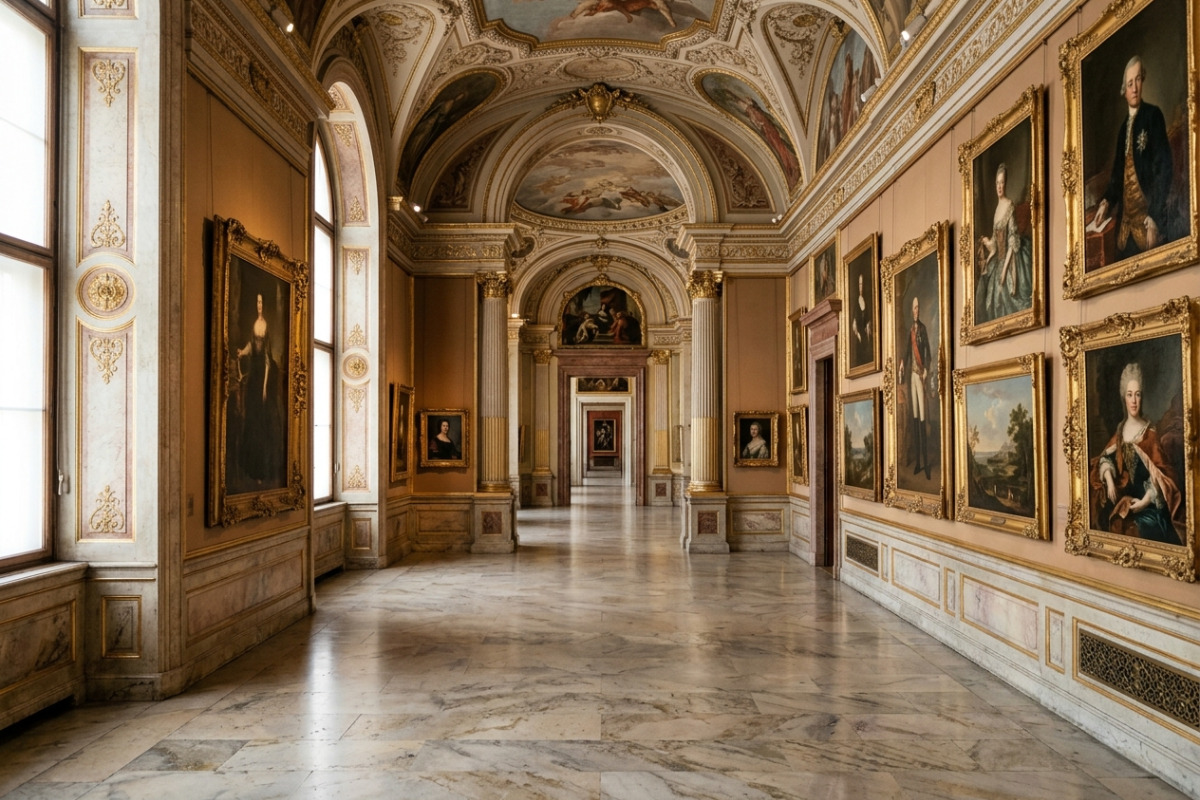
Construction began with the Lower Belvedere, completed around 1716, which served as the Prince's actual living quarters. Architecturally, this structure is more grounded and horizontal compared to its upper counterpart. The genius here lies in the details of the interior spaces, which were designed to impress visitors on a personal level. The Marble Hall is a prime example, featuring reddish-brown stucco marble and heavy gilding that catches the light in a way that makes the room feel alive. The architecture here is not just about walls and roofs; it is about framing the life of the Prince. The transition from the residential wings to the Orangery highlights the Baroque obsession with controlling nature, turning a garden greenhouse into a structural work of art.
The Upper Belvedere: The Theater of Power
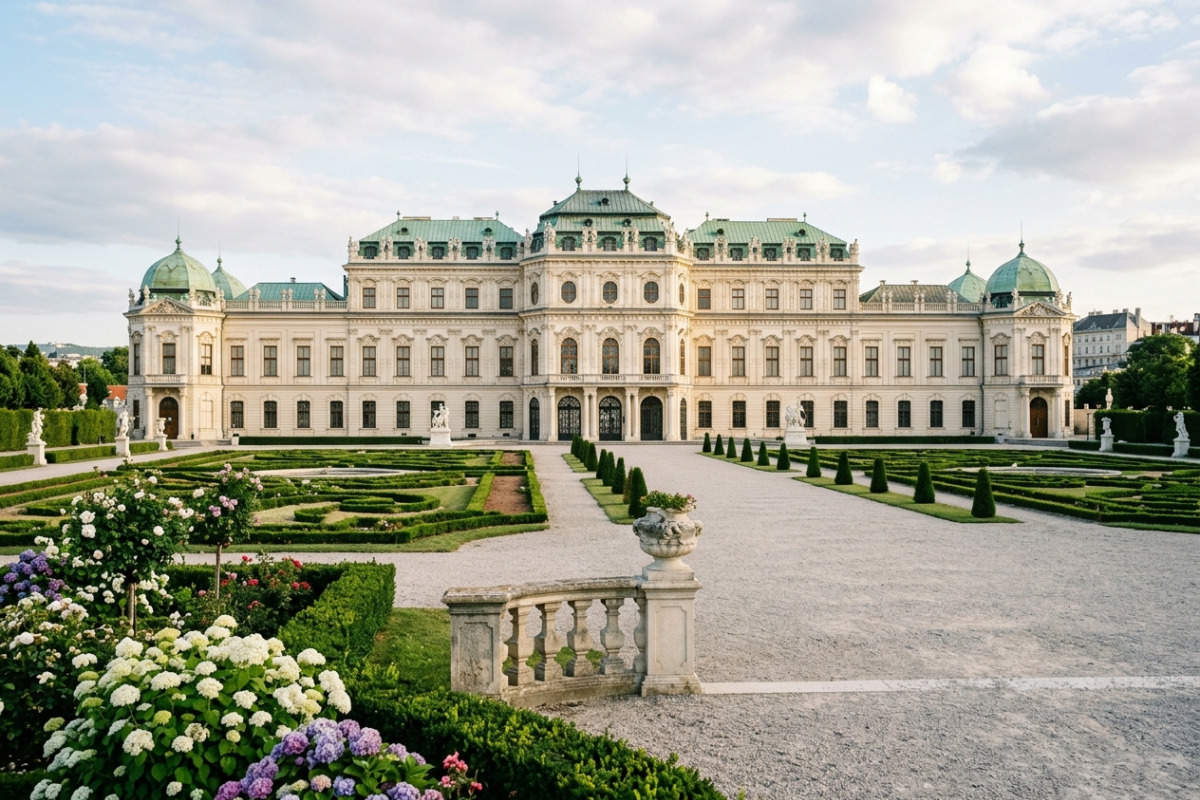
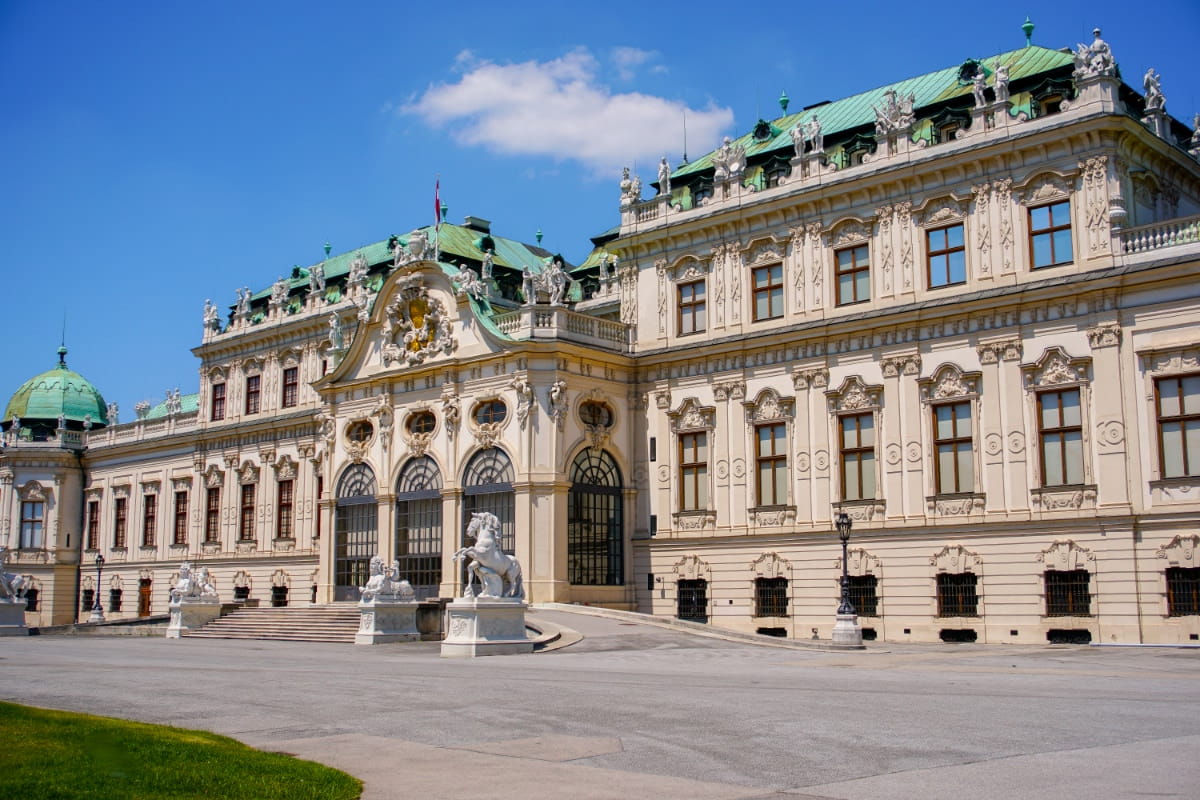
If the Lower Belvedere was for living, the Upper Belvedere was built for pure representation. Completed in 1723, this structure is Hildebrandt’s masterpiece. As you approach it from the gardens, the building seems to rise dramatically, an effect achieved through the architect's clever manipulation of perspective and the sloping terrain. The façade is a rhythmic composition of pavilions, pilasters, and intricate sculptural details. The famous roof, designed to resemble tents from the Turkish wars, serves as a subtle nod to Prince Eugene’s military campaigns. Inside, the Sala Terrena (Ground Floor Hall) features four mighty Atlantes figures supporting the vaulted ceiling. These architectural elements are not merely decorative; they symbolize the weight of the heavens and the strength of the Prince who supports the empire.
The Gardens: A Geometric Bridge
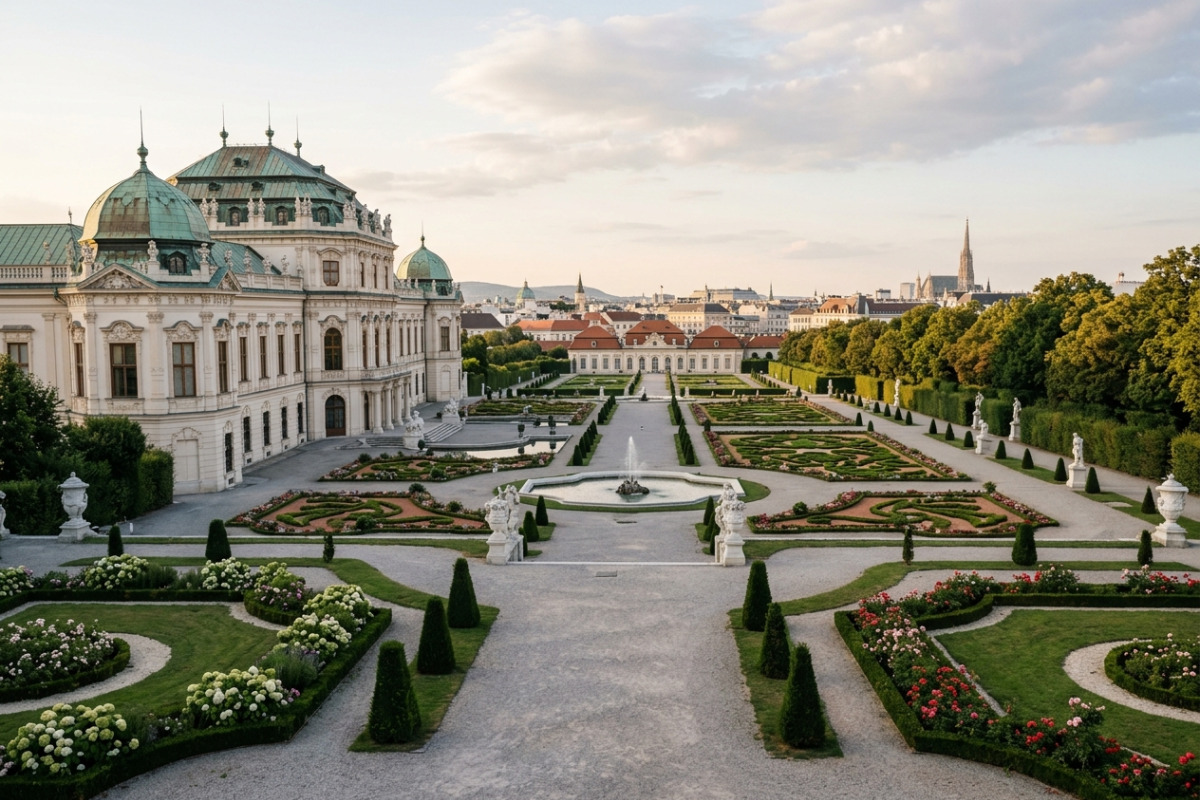
Connecting the two palaces is the magnificent garden, designed by Dominique Girard. In the Baroque era, the garden was considered an extension of the architecture—an outdoor room with walls made of hedges and ceilings made of sky. The layout is strictly symmetrical, adhering to the French formal style, yet it incorporates the sloping Viennese landscape to create a cascading effect.
- The Main Axis: A direct line of sight connects the Lower and Upper palaces, symbolizing the path from the earthly realm to the Olympian heights.
- Water Features: The large reflection pool in front of the Upper Belvedere was an engineering marvel of its time, designed to mirror the façade and double the visual impact of the architecture.
- Sculptural Allegories: Scattered throughout the greenery are statues representing the months of the year and various mythological deities, reinforcing the narrative of eternal order.
Modernism and the 21st Century: Belvedere 21
While the Baroque palaces speak of imperial grandeur, the Belvedere complex houses a distinct architectural counterpoint: Belvedere 21. Originally designed by Karl Schwanzer as the Austrian Pavilion for the 1958 World's Fair in Brussels, this building was later relocated to Vienna and integrated into the Belvedere institution. It represents a radical shift in architectural philosophy. Where the Baroque palaces are built of stone and stucco to convey permanence and weight, Belvedere 21 is constructed of steel and glass, embodying the modernist ideals of transparency, lightness, and flexibility.
This structure is a testament to post-war modernism (specifically the International Style). It does not try to compete with the Baroque grandeur of Prince Eugene’s residence; instead, it offers a clean slate. The open floor plan and the abundance of natural light make it a perfect vessel for contemporary art. Standing in the shadow of the Upper Belvedere, this modernist cube creates a fascinating tension. It forces the visitor to reconcile two very different versions of Austria: the imperial superpower of the 18th century and the progressive, democratic republic of the 20th and 21st centuries.
Cultural Shifts Reflected in Stone
The architectural styles of the Belvedere are not just aesthetic choices; they are solidified history. The transition from the ornate curves of the Baroque to the functional geometry of Modernism mirrors the cultural shifts of European society. The Baroque era was defined by Absolutism, where architecture served to glorify the ruler and the church. Every column and fresco was a calculated move to impress and intimidate. In contrast, the modernism of Belvedere 21 reflects a shift towards humanism and accessibility. The architecture is no longer about barriers and hierarchy but about openness and the democratization of space.
Comparative Architectural Features
To better understand the interplay between these eras, we can look at the specific architectural elements that define each structure within the complex:
| Feature | Baroque (Upper & Lower Belvedere) | Modernism (Belvedere 21) |
| Primary Materials | Sandstone, marble, stucco, gold leaf | Steel, glass, reinforced concrete |
| Structural Philosophy | Mass, ornamentation, theatricality | Lightness, transparency, function |
| Relationship to Light | Controlled, dramatic lighting via windows/mirrors | Flooded with natural light, open walls |
| Roof Design | Complex mansard roofs, copper domes | Flat, floating roof structure |
| Symbolism | Imperial power, mythology, military victory | Future-oriented, democratic, experimental |
A Living Dialogue of Design
Visiting the Belvedere today is an exercise in time travel. You are not just walking through a gallery; you are walking through the evolution of architectural thought. The genius of the site lies in how these opposing styles manage to coexist. The carefully manicured Baroque gardens provide a breathing space that separates yet connects the historic palaces with the modern city skyline and the modernist pavilion. It is a reminder that architecture is never static. It evolves, adapts, and converses with the past.
Today, the Belvedere continues to function as a museum, showcasing Austrian art from the Middle Ages to the present day. It remains one of Vienna's most popular tourist attractions, a testament to the enduring power of its architecture and the stories it tells. Ongoing preservation efforts ensure that both the Baroque palaces and Belvedere 21 remain vibrant cultural landmarks for generations to come.
Whether you are admiring the frescoed ceilings of the Marble Hall or standing before a provocative contemporary installation in the glass atrium of Belvedere 21, the experience is unified by a commitment to excellence. The Belvedere proves that history and modernity are not enemies; they are partners in telling the story of human creativity. As you leave the grounds, take a moment to look back at the reflection of the Upper Belvedere in the water basin—a perfect image of the past, rippling into the present.