Architectural Marvels of Upper Belvedere: A Baroque Journey
When travelers think of Vienna, images of imperial grandeur and artistic heritage immediately come to mind. For many, the Upper Belvedere is synonymous with Gustav Klimt’s The Kiss, drawing millions of eyes to its golden hues. However, focusing solely on the canvas collection misses a crucial point: the building itself is a monumental work of art. Standing proudly at the top of the sloping gardens, the Upper Belvedere is not just a museum housing treasures; it is a stunning example of Baroque architecture that tells the story of ambition, military victory, and the pursuit of beauty. As we explore this structure in January 2026, the crisp Viennese air only seems to sharpen the intricate details of its facade, inviting us to look closer at the stone, the stucco, and the genius behind the design.
To truly appreciate the Upper Belvedere, one must shift perspective from viewing it as a container for art to viewing it as the primary exhibit. Commissioned by Prince Eugene of Savoy, a man whose military prowess was matched only by his taste for the exquisite, this palace was designed to impress. It was never intended as a primary residence but rather as a venue for lavish festivities and representation. Every corner, from the copper roof to the marble floors, was calculated to display power and sophistication. Let us embark on a journey through the architectural layers of this Viennese icon.
The Vision of Johann Lukas von Hildebrandt
The mastermind behind this architectural jewel was Johann Lukas von Hildebrandt, one of the most significant architects of the Austrian Baroque era. Construction began in 1717 and was completed in 1723, a remarkably fast timeline for such an elaborate structure. Hildebrandt’s design philosophy was deeply rooted in the interplay between structure and ornamentation. Unlike the heavier, more fortress-like palaces of the earlier periods, the Upper Belvedere was designed to feel light, almost airy, despite its massive scale. This was achieved through a unique pavilion-style composition, where the building seems to consist of several distinct blocks merged into a harmonious whole.
The collaboration between Prince Eugene and Hildebrandt was a meeting of two great minds. The Prince wanted a monument to his victories against the Ottoman Empire, and Hildebrandt translated this into stone. The result is a building that feels dynamic. As you walk around the exterior, the facade changes; it is rhythmic and theatrical. The architect utilized a rich decorative language, incorporating sculptures, reliefs, and varied window shapes to ensure that the eye never rests on a dull surface. It is a masterclass in Baroque theatricality, where architecture is used to evoke emotion and awe.
A Symphony of Stone: The Exterior Design
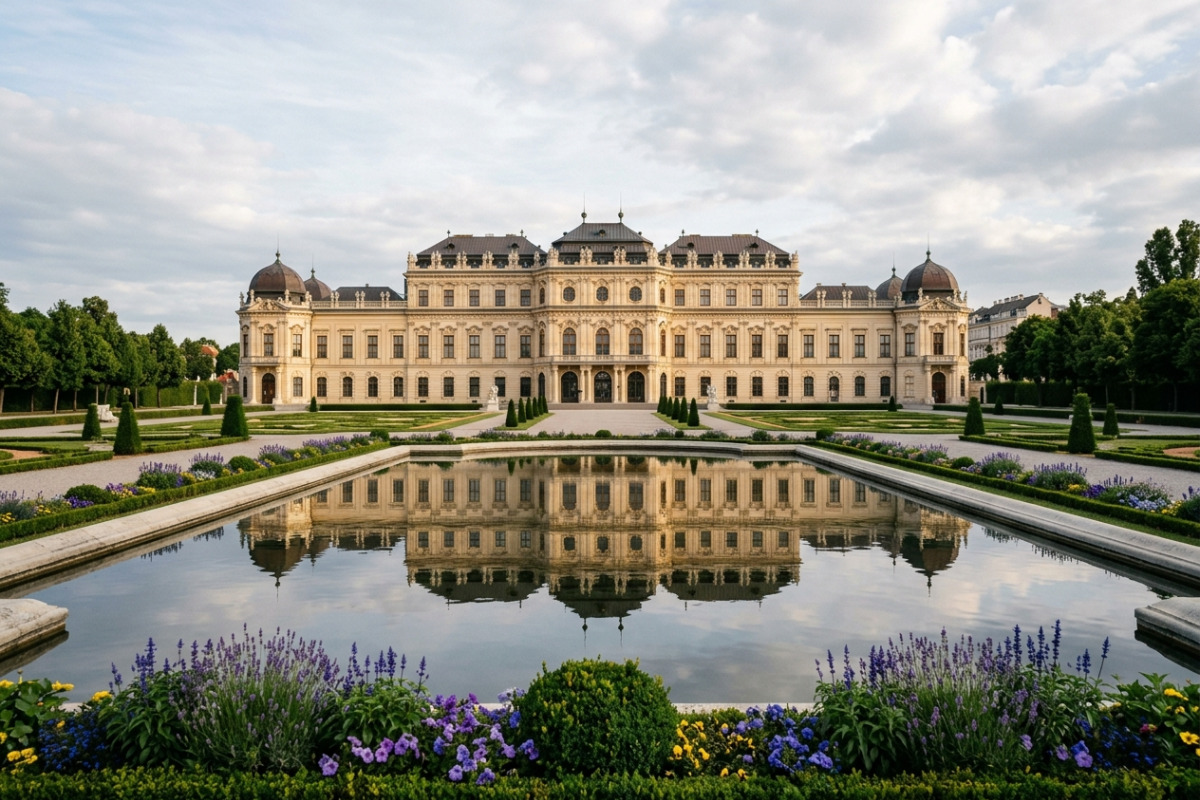
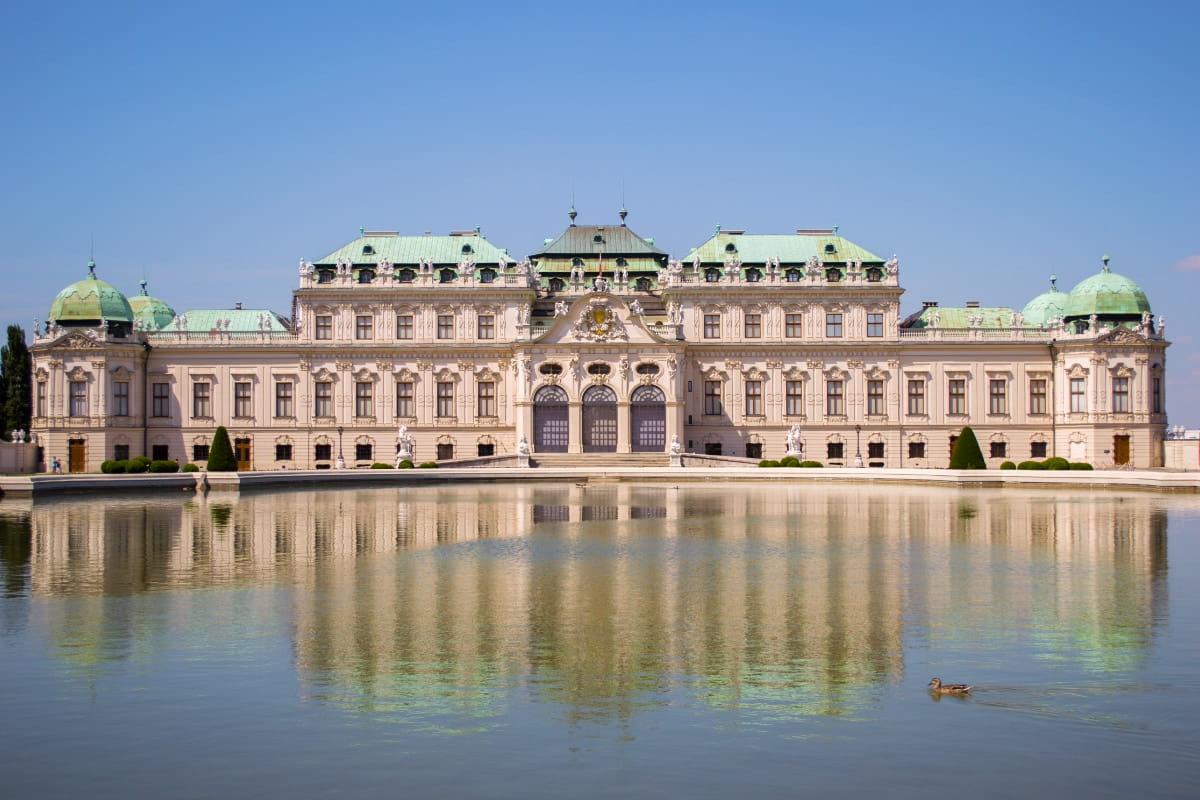
Before stepping inside, it is essential to pause and admire the exterior, particularly the roof and the facades. The roof of the Upper Belvedere is one of its most distinctive features. Resembling the shape of military tents, the copper domes are a subtle nod to Prince Eugene’s life as a commander. Over the centuries, and certainly visible today, the oxidized copper has turned a distinct green, contrasting beautifully with the creamy white stucco of the walls. The complex roofline, adorned with decorative vases and statues, creates a silhouette that is instantly recognizable against the Vienna sky. Consider the placement of these statues; each one is carefully positioned to catch the light and create dramatic shadows, further enhancing the visual impact of the roofline.
The facade facing the gardens is perhaps the most photographed, but the details require a closer look to be fully appreciated. Hildebrandt employed a sophisticated hierarchy in his design:
- The Ground Floor: Designed with rusticated stone, giving an impression of stability and strength, grounding the building to the earth.
- The Piano Nobile: The main floor features tall, arched windows and elaborate pediments, signaling that this is where the most important events took place. The windows themselves are framed by intricate carvings and topped with sculpted keystones, adding to the sense of grandeur.
- The Upper Story: Slightly shorter but heavily decorated, capping off the vertical rise of the building. Notice the use of pilasters and decorative moldings that run along the entire length of this story, creating a sense of continuity and elegance.
- The Sculptures: Throughout the exterior, you will find coats of arms and allegorical figures representing victory and fame, weaving the Prince's personal narrative into the walls. These sculptures are not merely decorative; they are integral to the building's narrative, telling the story of Prince Eugene's life and achievements.
The Sala Terrena: Where Giants Hold the Weight
Upon entering the palace, the first space to greet visitors is the Sala Terrena (Garden Hall). This room is an architectural marvel of structural engineering and artistic symbolism. Originally, this space was open to the elements, serving as a transition zone between the garden and the interior. The most striking feature here is the presence of four massive Atlantes—muscular male figures carved from stone that appear to hold up the vaulted ceiling. These figures are not merely decorative; they symbolize the immense effort required to support the heavens, or in this case, the grandeur of the palace above.
The Sala Terrena is a study in Baroque contrast. The white stucco work against the stone creates a sense of brightness, yet the low vaulted ceilings provide an intimate, almost cavernous atmosphere. It was designed to cool guests coming in from the summer heat while simultaneously overwhelming them with the physical power of the architecture. The delicate stucco ornaments that swirl around the arches soften the heavy appearance of the structural pillars, showcasing Hildebrandt’s ability to balance mass with elegance. Look closely at the faces of the Atlantes; each one has a unique expression, conveying a sense of strain and determination.
The Marble Hall: The Heart of the Palace
Ascending the Grand Staircase, which itself is adorned with intricate stucco reliefs and wrought-iron lanterns, leads you to the crowning jewel of the interior: The Marble Hall. This two-story hall is the centerpiece of the Upper Belvedere and is historically significant as the place where the Austrian State Treaty was signed in 1955. However, architecturally, it is a feast for the senses. The room is clad in reddish-brown marble, which exudes a warmth and richness that paints a stark contrast to the white vestibules.
The architecture of the Marble Hall is designed to direct the gaze upward. The walls are punctuated by gold-plated pilasters and mirrors that reflect the light pouring in from the garden-facing windows. Above, the ceiling opens up into a magnificent fresco painted by Carlo Innocenzo Carlone. This trompe-l'œil (trick of the eye) painting creates the illusion that the roof has been removed, revealing a sky filled with mythological gods and allegorical figures. It is a perfect example of the Baroque desire to dissolve the boundaries between the built environment and the divine. Spend some time examining the details of the fresco; the artist's skill in creating depth and perspective is truly remarkable.
Key Architectural Elements at a Glance
To better understand the diversity of design within the Upper Belvedere, here is a breakdown of its most distinct architectural features:
| Feature | Location | Architectural Significance |
| The Atlantes | Sala Terrena | Structural columns sculpted as giants, representing strength and the burden of the heavens. |
| The Octagonal Cabinet | Corner Room | A playful, intimate space featuring mirrors and grotesque painting styles, contrasting grand halls. |
| The Chapel | South-East Corner | Features distinct spatial geometry and an altarpiece by Francesco Solimena, blending spirituality with palace luxury. |
| The Grand Staircase | Central Core | A ceremonial ascent featuring large lamps and stucco work, acting as a stage for the arrival of guests. |
| Ceiling Frescoes | Marble Hall | Illusionistic painting that extends the architectural height virtually, a staple of High Baroque art. |
The Chapel: A Hidden Gem of Proportion
Often overlooked by visitors rushing to see the art galleries, the Palace Chapel is a testament to Hildebrandt’s skill in handling smaller, spiritual spaces. Located in the south-east corner, the chapel is relatively modest in size but monumental in design. The architecture here is vertical, drawing the eye up toward the altar and the ceiling frescoes. The use of light is particularly clever; windows are positioned to illuminate the altar naturally, creating a divine glow during the morning hours.
The stucco work in the chapel is among the finest in the entire complex. Unlike the robust, muscular forms in the Sala Terrena, the decoration here is delicate and ethereal, featuring cherubs and floral motifs. It serves as a reminder that Prince Eugene was not only a man of war but also a man of deep faith. The integration of the chapel into the main building without disrupting the exterior symmetry is a subtle but brilliant architectural feat. Note the intricate detailing of the altarpiece, a masterpiece of Baroque sculpture and painting.
The Interplay of Light and Landscape
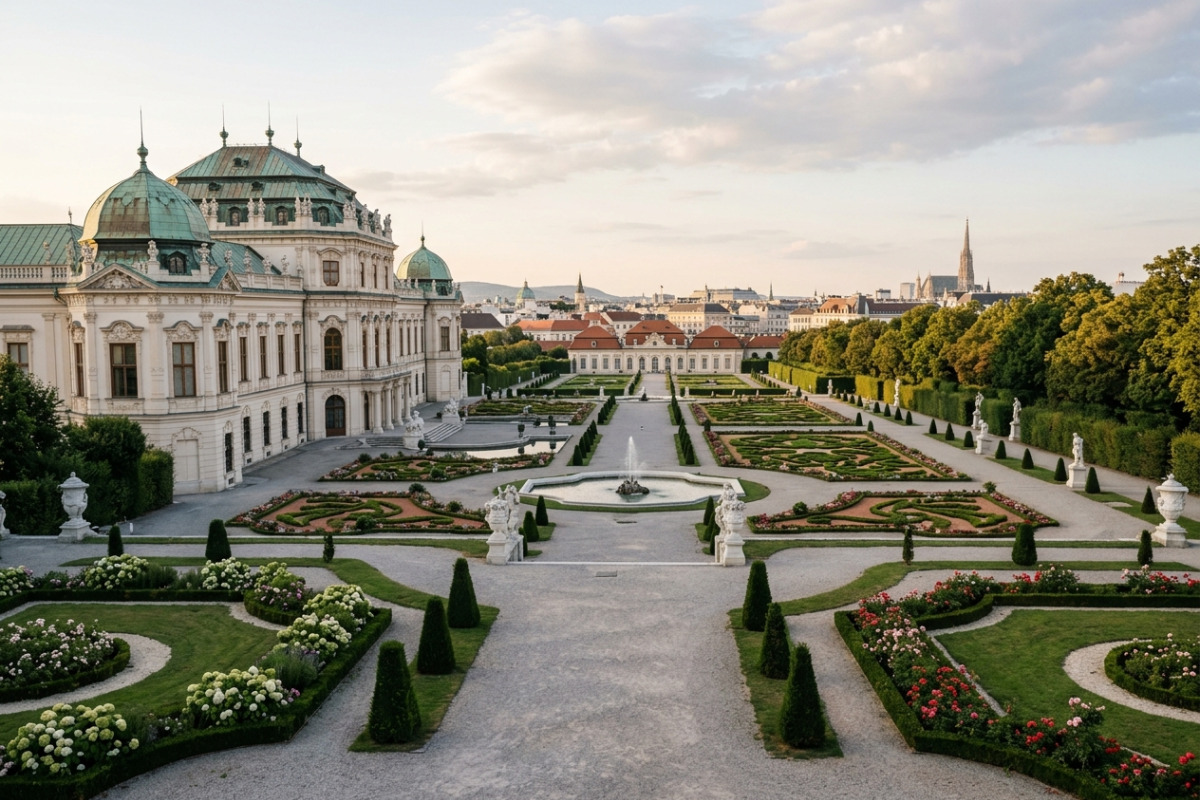
One cannot discuss the architecture of the Upper Belvedere without acknowledging its relationship with the landscape. In Baroque theory, the garden was an extension of the architecture, and the building was the focal point of the garden. The Upper Belvedere sits at the highest point of the terrain, commanding a view that stretches across the formal gardens down to the Lower Belvedere and beyond to the city of Vienna. This positioning was intentional, designed to assert dominance over the landscape.
The windows of the palace act as frames for the living art outside. As you move through the rooms, the changing light transforms the interior atmosphere. In the morning, the eastern rooms are bathed in a cool, crisp light, while the late afternoon sun sets the Marble Hall aglow with warm, golden tones. This dynamic relationship between the sun and the stone ensures that the building feels alive, changing its mood as the day progresses. It is a masterful manipulation of natural elements to enhance the built environment. Consider how the architects used the orientation of the building to maximize the impact of the sun's rays, creating a constantly shifting play of light and shadow.
Why the Building Itself is the Masterpiece
Visiting the Upper Belvedere offers a dual experience. Yes, the walls hold some of the most important paintings in Austrian history, but the walls themselves tell a story just as compelling. From the muscular Atlantes of the ground floor to the heavenly illusions of the Marble Hall ceiling, the architecture of the Upper Belvedere is a journey through the Baroque mindset. It captures a moment in time where art, power, and nature were fused into a single, cohesive vision.
For the architectural enthusiast or the curious traveler, looking beyond the canvas reveals the true soul of this place. It is a structure that celebrates victory, embraces light, and defies gravity through illusion. So, the next time you find yourself standing before this grand palace, take a moment to admire the roofline, touch the cool marble, and look up at the stucco giants. You are standing in one of the world's greatest architectural triumphs.